

Timber and bamboo are chosen for how they look, and both are combustible. So how do you make an exposed structure safer in a fire without painting over the reason you chose it?
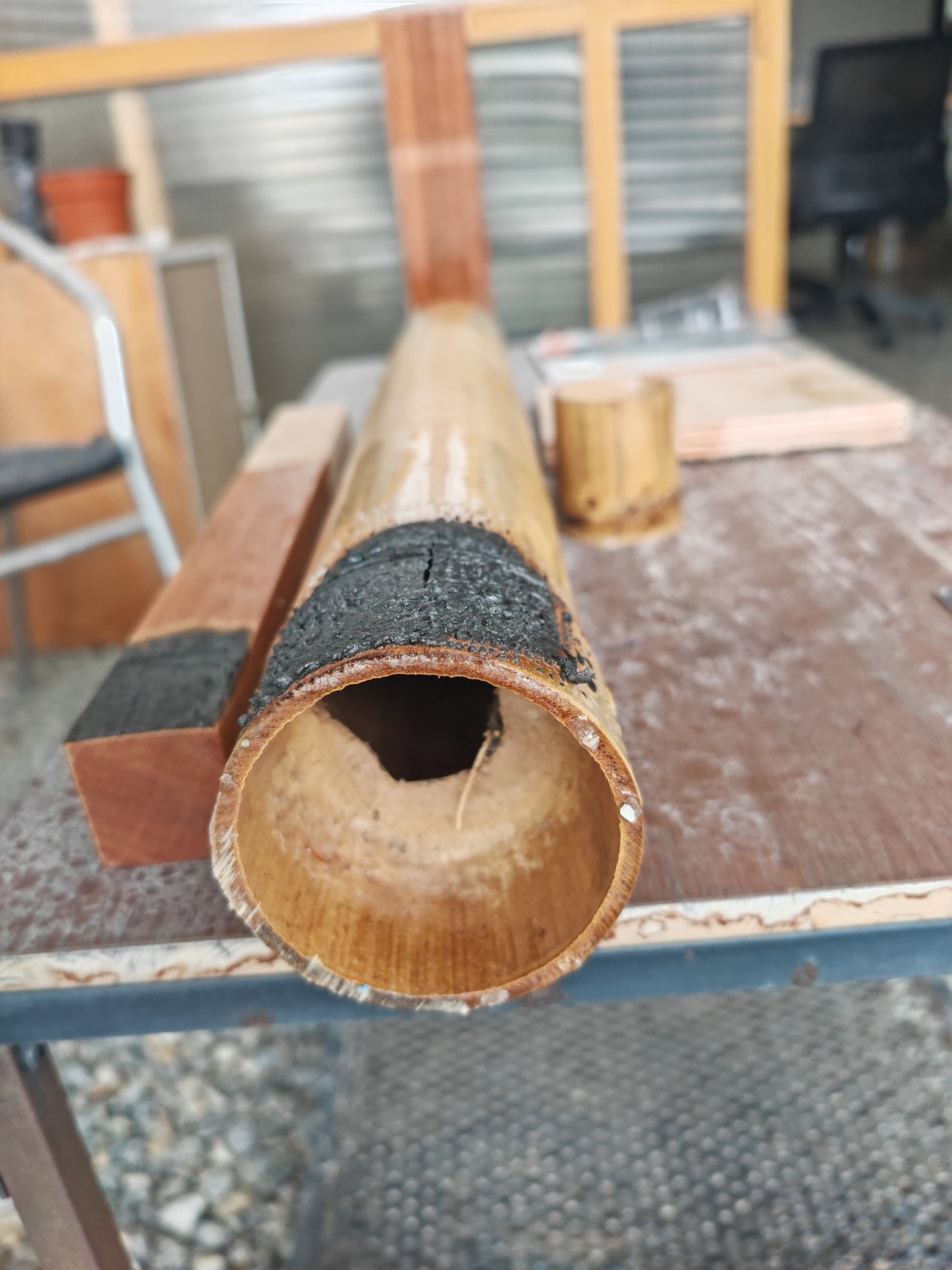
Why timber and bamboo need fire protection
Bamboo is now specified for eco-resorts, restaurants, schools, pavilions and homes. As projects grow and requirements tighten, fire safety becomes a design question, whether the bamboo is structural or decorative.
When heated, timber and bamboo decompose and release flammable gases. Two things matter most:
Ways to improve fire performance
The right measure depends on the building, its use and local requirements, and projects often combine several:
- Protective cladding. Fire-rated boards over the wood. Effective, but the material is hidden.
- Section sizing. Larger members so an outer layer can char and sound material remains. Some structural elements only.
- Impregnation. Flame-retardant chemicals in the wood. For new, treatable material, not finished installations.
- Surface coatings. A coating that slows flame spread or insulates the surface when heated. This is where intumescent coatings sit.
How intumescent coatings work
An intumescent coating reacts to heat. Unlike ordinary paint, which simply burns away, it swells into a thick, insulating char that sits between the flame and the material underneath.
This reaction is what separates an intumescent coating from a clear varnish or sealer. They can look similar on the wall, but they do not form a protective char.
The problem with opaque coatings
Most intumescent paints are coloured and opaque. That suits steel, which is usually hidden or painted anyway. On timber and bamboo it is a poor fit: designers specify these materials for their grain, texture and warmth, and an opaque film covers all three.
Dri-Gard Fireveil R60
Dri-Gard Fireveil R60 is a two-component, water-based intumescent fire-retardant coating for timber and bamboo. Part A is a colourless to light yellow liquid and Part B is a milky white liquid. Once mixed and applied, it cures to a clear film. Full technical details are in the Dri-Gard Fireveil R60 Product Data Sheet (PDF).
The aim is simple: protect the structure, and keep the wood looking like wood.
In normal service the cured film leaves the grain and colour of the substrate visible. When exposed to fire, it swells into an insulating char layer that slows the spread of flame and helps shield the material beneath. It is a water-based, low-odour system and is non-flammable in its wet state.
What the char looks like
These photographs are from small-scale torch demonstrations on timber and bamboo samples coated with Dri-Gard Fireveil R60. The reaction is concentrated where the heat is applied, and a thick char forms in the coating.
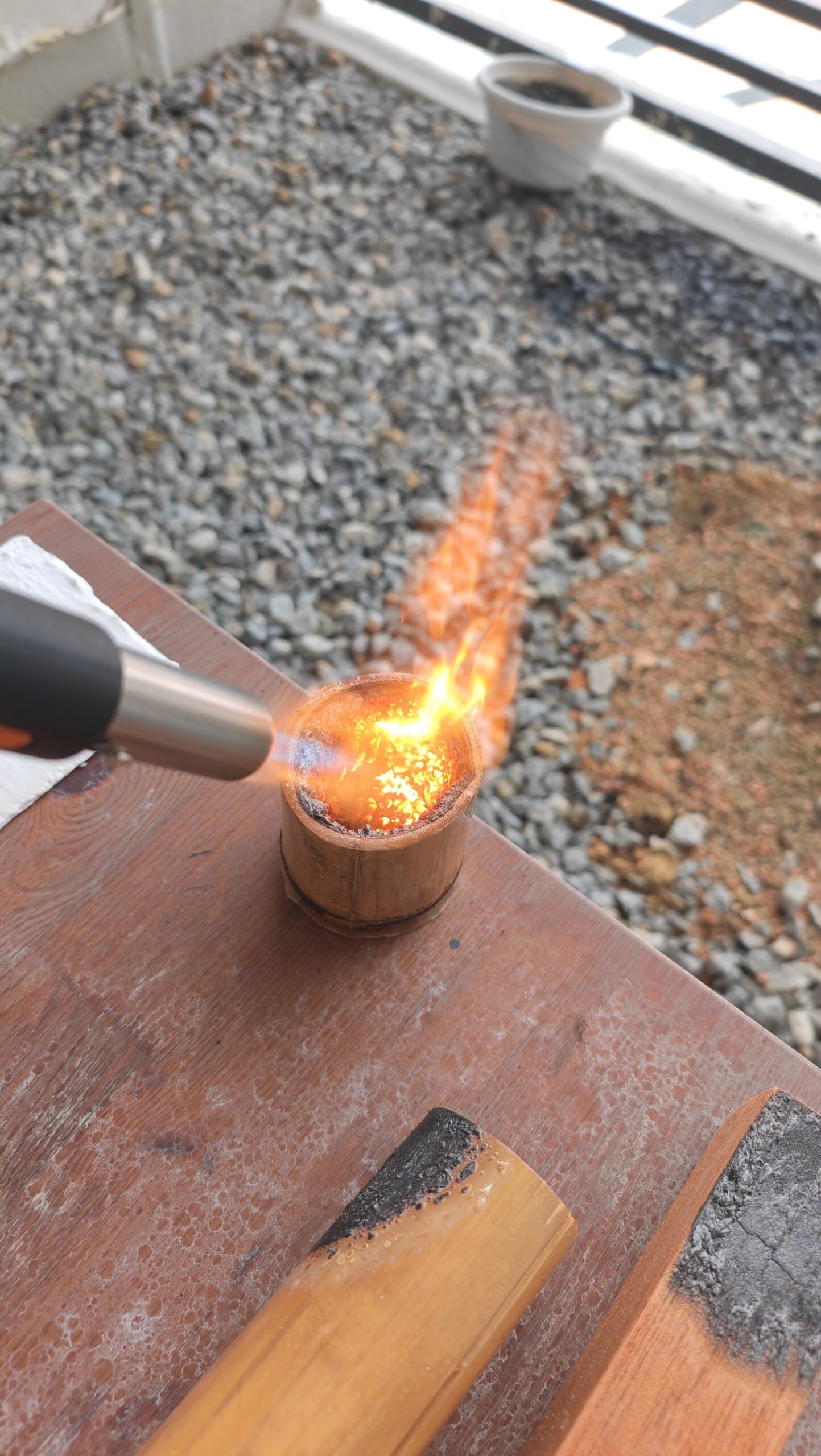
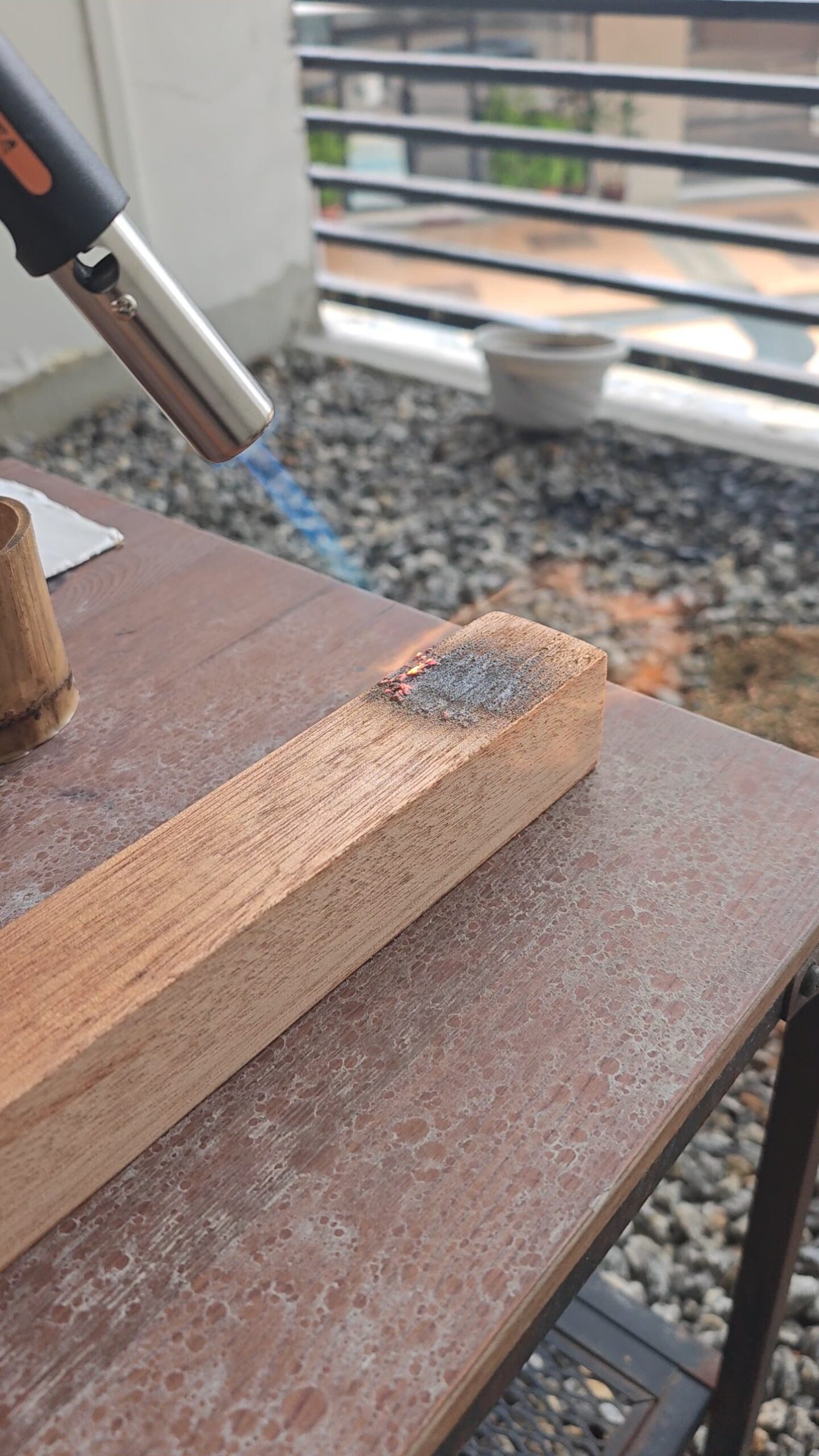
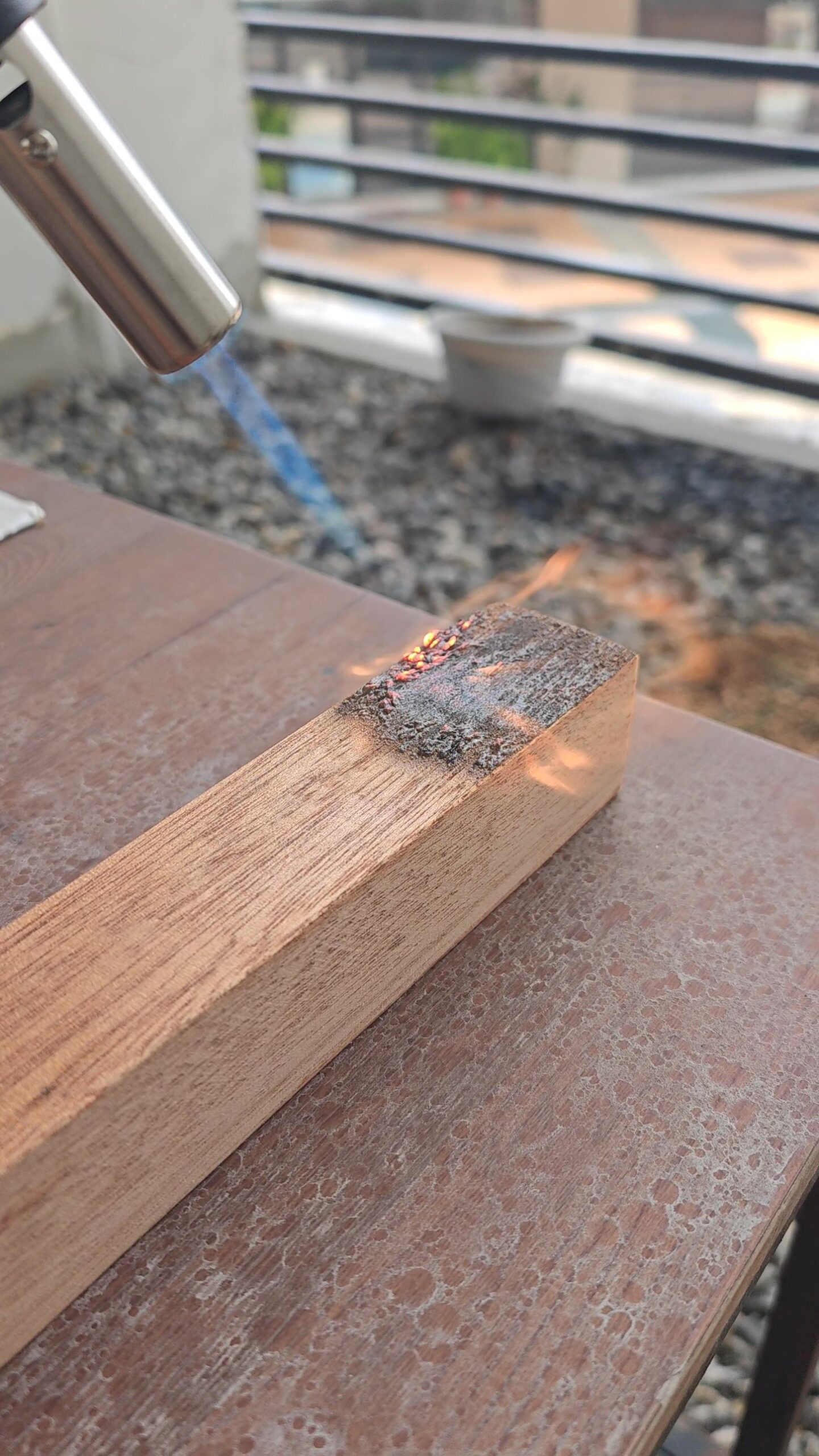
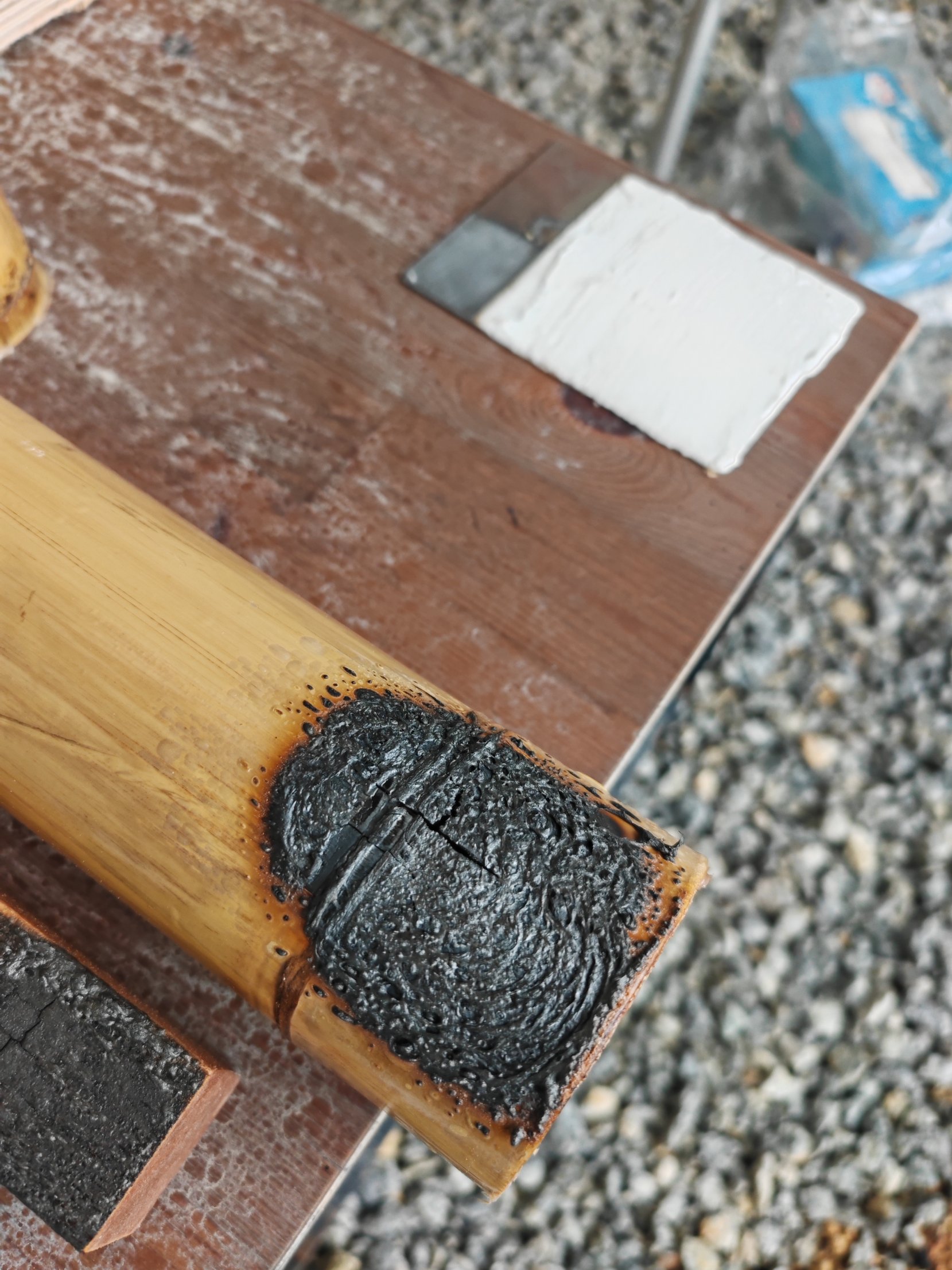
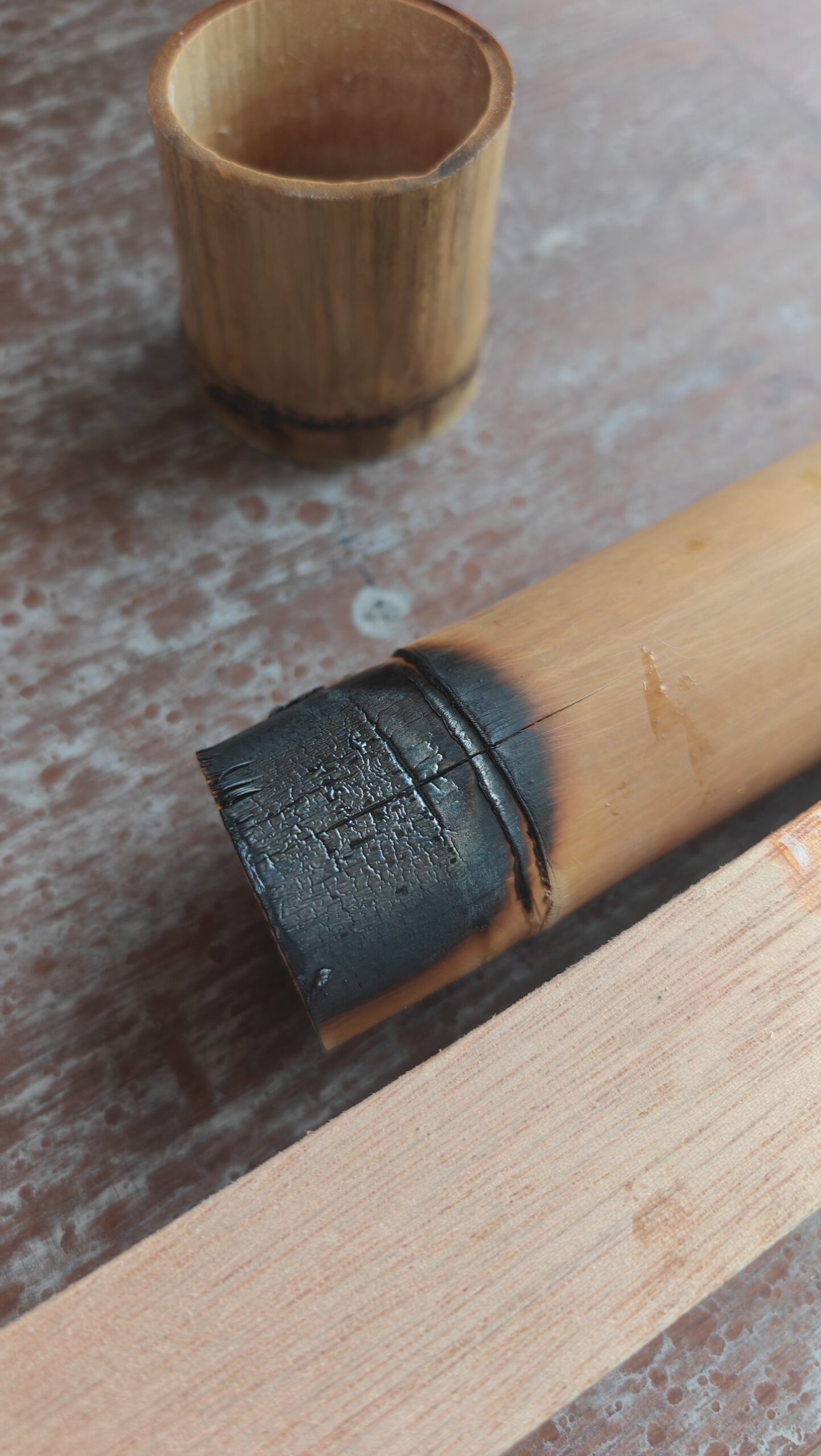
These are simple demonstrations to illustrate how an intumescent coating behaves. They are not a substitute for standardised fire testing, and do not describe the performance required by any particular project or authority.
Where it is used
Dri-Gard Fireveil R60 can be applied to both interior and exterior surfaces:
- Timber and bamboo structures, including poles, framing and exposed beams
- Timber wall and ceiling linings, panelling and joinery
- Bamboo features and finishes
- Wood-based panels
Typical projects include eco-resorts, hotels, restaurants, pavilions, showrooms, schools, commercial buildings and homes, particularly sustainable and biophilic designs where natural material is part of the architecture.
Common questions
Will it change how the wood looks?
The cured film is clear, so grain and colour remain visible. Some substrates may shift slightly in tone, which is why a trial area is recommended before coating the full surface.
Can it go over varnish or paint?
No. Existing finishes must be removed so that the coating bonds directly to the bare wood.
Is it suitable for outdoor use?
Yes. Use the 1 : 1 mixing ratio for exterior application and the 2 : 1 ratio for interior application, and avoid applying when rain is expected.
How long before it is fully effective?
The coating is hard dry in under two hours and fully cured in 24 hours, with complete fire resistance reached after 7 days.
Does a clear coating replace a fire engineer's advice?
No. Fire protection should be considered early in the design, and the right solution depends on the building type, the elements being protected and local requirements. It is worth involving your fire consultant and the relevant authority from the start.
Dritech Chemicals works with architects, consultants, developers, contractors and bamboo specialists on coatings for wood and bamboo. If you would like technical information, the Product Data Sheet or advice on a project, our team is happy to help.
Read the Dri-Gard Fireveil R60 Product Data Sheet (PDF), or browse other technical documents in our documentation section.
The information in this article is given in good faith based on current knowledge and experience of the product when properly stored, handled and applied under normal conditions. Site conditions and substrates vary, and no warranty of merchantability or fitness for a particular purpose is implied. Users must test the product's suitability for their application and refer to the latest Product Data Sheet (V1, Dec 2025) and Material Safety Data Sheet. Dritech Chemicals Sdn. Bhd.